Skills, Strength and a Fresh Start for Young Women in Kajiado
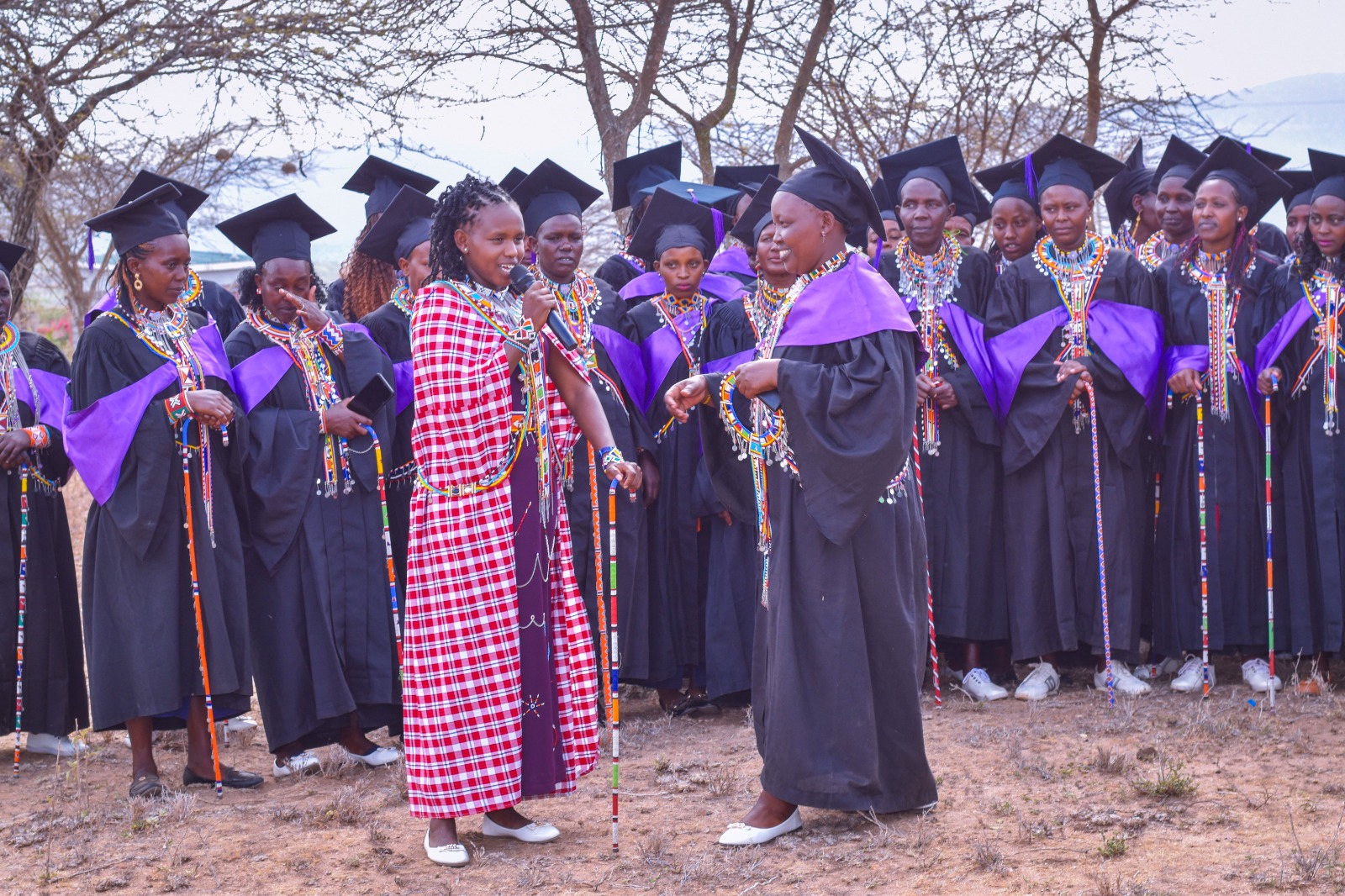
In January 2026, Nareto Latia, a woman led CBO in Delalekutuk Ward, Kajiado Central Sub County reached a historic milestone with its first-ever graduation ceremony. Forty-four young women successfully completed the Tailoring and Dressmaking course under the NITA Government Trade Test Level 3 certification. For many, this was the first time they had undertaken formal examinations or been publicly recognized for academic and professional achievement. The graduation represented more than individual success. It signaled a shift in what is possible for women and girls in remote communities where opportunities for structured training have historically been limited.

The skilling approach recognizes that economic empowerment is closely linked to protection from Sexual and Gender Based Violence (SGBV) in particular harmful traditional practices such as female genital mutilation (FGM), child marriages and domestic violence still rampant in the county. By equipping young women with skills that enhance income-generation, the center enables participants to, make independent decisions, and pursue safer and more dignified livelihoods. It also contributes to broader social change by offering alternative economic pathways that empower them to fight SGBV.

The impact of the programme is already visible as ggraduates prepare to establish small businesses within their community. Strengthened market linkages are also creating opportunities for graduates to reach wider clients beyond their immediate surroundings.

The Collaborative Centre for Gender and Development (CCGD) continues to support Nareto Latia  as a community skilling partner under the Jasiri programme. Together, this partnership demonstrates how community driven initiatives can create meaningful change when women are equipped with skills, supported by strong networks, and provided with pathways toward economic independence.

Leave a Reply

Your email address will not be published. Required fields are marked *


Search


A Centre for Policy Advocacy and Non-Discrimination
 

Equipping Young Women to Overcome Vulnerability

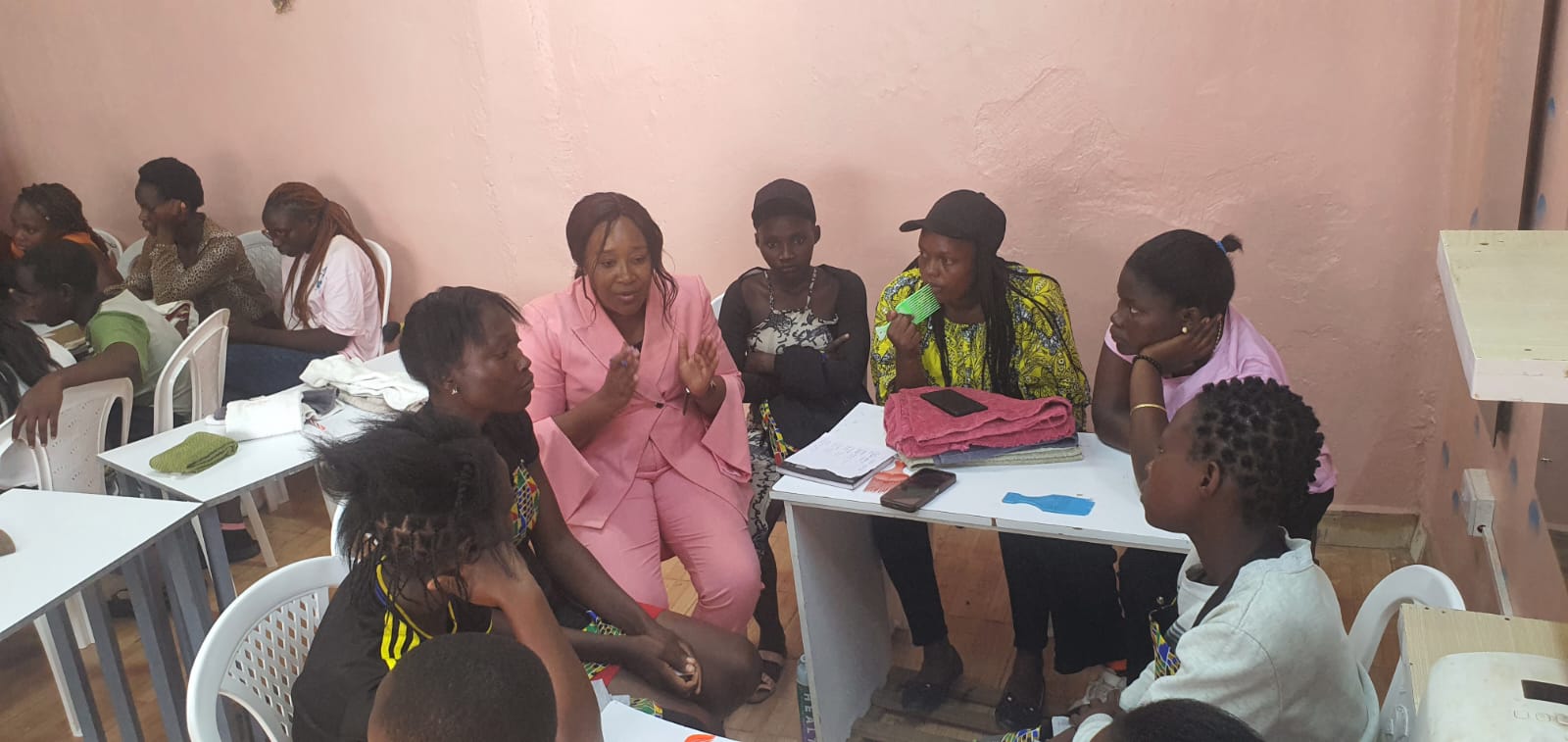
Felista Titi’s journey tells a story that many young women in Busia can relate to. In a region where cases of GBV and early marriages still cut short the dreams of girls, opportunities for economic independence can make all the difference.  Felista has long operated a hair salon where she trains young women on beauty therapy and hairdressing, not just as a trade, but as a way to regain dignity. As many needy young women recognized the opportunity she found it increasingly difficult to meet demand and wished for support to absorb more trainees.

Late last year her work was recognized by the Jasiri program (implemented by CCGD in Busia county) under which she got support to open a separate better equipped skilling center. It is accredited by the National Industrial Training Authority (NITA) which certifies graduates. The courses offered are practical, marketable, and accessible to young women who may not have had other opportunities.

The transformation has been visible. Young women who once depended entirely on others are now earning their own income. Some are supporting their children. Others are delaying marriage because they want to secure their future first. Skills have given them ability and confidence, and certification – legitimacy that opens doors beyond their immediate living and working environments.

Felista is demonstrating how investing in skills can progressively challenge cycles of vulnerability, GBV, and early marriage and replace them with income, confidence, and possibility.

Leave a Reply

Your email address will not be published. Required fields are marked *


Search

A Centre for Policy Advocacy and Non-Discrimination
SGBV survivors access services at Gender Based Violence Recovery Centres

Ms Beatrice Gitau, a Clinician at Msambweni County Referral Hospital in Kwale County, says the GBVRC unit at the hospital has strengthened the hospital’s capacity to deal with SGBV cases within the county.

“No survivor goes home without service; previously, once the pharmacy was closed, survivors could not get PEP (post-exposure prophylaxis), emergency contraception, or STI prophylactic treatment. However, now that there is a dedicated unit for SGBV survivors, all of these treatments are available even on weekends,” Ms Beatrice explained.

Furthermore, the availability of services at the centre has led to regular visits by survivors seeking various types of treatment provided at the unit. “In the month of May alone, we were able to attend to 11 cases of SGBV and 49 cases of physical and emotional abuse at the facility,” Ms Beatrice said.

She lamented the lack of safe shelters where close relatives of the survivor could be housed while the survivor was admitted to the unit, citing an example of a defilement case involving a daughter and the father, in which the mother was unable to return home or report the case to the police due to societal cultural norms.

“It would be very nice if we had a ‘centre’ where we could keep the mother and baby or father or whomever it is to the survivor for a while before they can get arrangements on where they are going to go back to,” the Clinician added.

CCGD with support from Master Card Foundation (MCF) supported the counties of Kwale, Kajiado and Busia to set up GBVRC units at their referral hospitals.

By Maurice Goga

Countering Sextortion as a Gender-specific form of Corruption in Kenya

CCGD and Kenya National Commission on Human Rights (KNCHR) signed an MOU on Monday, 19th June 2023 to collaborate in research on the prevalence of sextortion in different sectors that include employment and education. Further, they will disseminate research findings in particular to policymakers in critical government ministries departments and agencies (MDAs) and the general public.

The initiative is supported by the Ford Foundation and seeks to strengthen partnerships in recognizing and fighting sextortion as a form of corruption. It seeks to engage with CSO and private sector Consortia in Kenya and beyond in the policy advocacy campaign and implementation of relevant laws and policies to counter sextortion.

By Diana Mwanzia

Focus on Mitigating Online Child Sexual Exploitation and Abuse as Counties Mark Day of the African Child

During the celebration of the 2023 Day of the African Child, the Busia County Government in collaboration with the National Council on the Administration of Justice (NCAJ) and Busia County Civil Society Organizations network launched the training manual for mitigating Online Child Sexual Exploitation and Abuse (OCSEA).

Speaking at the celebration held on 16th June 2023 at Mungatsi Primary School in Nambale sub-county under the theme: The Rights of the Child in the Digital Environment, Lady Justice Theresia Matheka, underlined the importance of defending children’s rights on various digital platforms, adding that the manual will tremendously assist in combatting OCSEA, which is prevalent in the country.

She noted that Kenya has embraced technology almost in every sector and that we cannot run away from it but rather we can always develop comprehensive legal frameworks and policies that will help in mitigating the OCSEA.

According to Ms Mary Makokha of the Rural Education and Economic Enhancement Programme (REEP), a representative of the Busia County CSOs Network, the day provided an opportune time for state and non-state actors to reflect on how children in Busia County can live in an environment free of Sexual and Gender-Based Violence (SGBV) both online and offline, given the county’s rise in violence against children.

Similar events were staged in Baringo, Kwale, and Kajiado counties, with clear appeals to the public to protect children from OCSEA dominating the proceedings. Ag. Chief Magistrate Lady Justice Judith Wanjala of the Kabarnet Law Court said that through the usage of digital spaces and the internet, children are now able to testify or function as witnesses without attending court hearings. However, she called for the proper use of digital spaces. “We are in a digital world, we cannot avoid being in a digital environment, all we can do is be careful while using it because there are laws governing the use of the internet,” she said.

While in Kajiado County, Ibisil ward area chief, Mr Ngaru Oluma asked parents to supervise their children’s phone usage, which he said had considerably contributed to sexual exploitation, leading to an increase in teen pregnancies in the county. 

In Kwale County, the Deputy Governor, H.E Josphat Chirema, said that the county government will boost the bursary kitty for children in primary and junior secondary schools to keep them in school and safeguard them from various sorts of exploitation including OCSEA.

Collaborative Centre for Gender and Development with support from various partners including UNFPA Kenya, WE-effect and Mastercard Foundation contributed to supporting this year’s Day of the African Child celebrations in Baringo, Kwale, Busia and Kajiado counties.

By Sharon Ngaira and Janet Ongoli

Implement pledges to combat Corruption

Civil Society Organizations under the Citizen Agen da Pillar umbrella have called on the government to make their commitment to fighting corruption a reality.

Speaking on behalf of CSOs at a press conference on the state of governance and recent developments in the fight against corruption in Kenya on July 6, 2023, Suba Churchill, the Executive Director of Kenya National Civil Society Centre noted that under the Ken ya Kwanza manifesto, also known as the ‘The Bot tom-up Economic Transformation 2022-2027,’ the government committed to ending the weaponization and politicization of anti-corruption efforts by allowing relevant institutions to freely exercise the independence granted to them by the Constitution; grant them and the police financial independence to end their reliance on the Office of the President and promote accountability and openness in the management of public affairs; institutionalize open governance in all State organs and agencies and publish an annual State of openness report.

The CSOs commended the Ethics and Anti-Corruption Commission (EACC) for making some progress in the recovery of corruption-related asserts but regretted recent efforts by members of parliament to water down safeguards against corruption by proposing amendments that would weaken the law.

They urged MPs to be at the forefront of the battle against corruption because they are charged with the primary responsibility of providing oversight to the Executive and serving as the defender of citizens’ interests.

The Citizens Agenda Pillar is one of the key planks of the Multi-Sectoral Forum (MSF): the initiative that brings together the private sector, professional associations, civil society organizations, and a diverse array of interest groups to address governance and citizens-centered issues of public interest and concern in Kenya.

By Purity Jebor

Mitigating Drought-induced Sexual and Reproductive Health (SRH) and GenderBased Violence (GBV) risks in Garissa, Marsabit, Turkana and Mandera

As the effects of a 5-year drought in Kenya’s Arid and Semi-Arid Land (ASAL) counties continue to unravel, SRH and GBV risks are on the rise hitting vulnerable populations and in particular women and girls hard. A new project intervention that aims to have an improved utilization of quality integrated Sexual Reproductive Health (SRH) and Gender Based Violence (GBV) information and services has been launched. The intervention approach is through institutional capacity building, provision of mental health and psychosocial support services, improved SRH and GBV resilience and adaptation mechanisms and Improved integration of Sexual Reproductive Health and Gender Based Violence in community surveillance and early warning and anticipatory action systems in the four counties.

 The project is focusing on the provision of mental health and psychosocial support and shall involve enhancing communities in respective counties access to ss to development of standards and protocols for GBV helpline actors involved in the drought response, train 40 GBV helpline staff on basic psychosocial first aid (PFA), conduct awareness on the existing GBV helpline at national and county levels, train 40 community MHPSS providers in drought-affected counties and engage community members in the four counties in By Maurice Goga MHPSS activities. All these will be done through a partnership with HAK 1195 and Dan Shieshie Foundation.

Speaking during the project launch in Garissa County, UNFPA Country Representative, Anders Thomsen noted that the project will help address some of the challenges women and girls face during emergencies or disasters. Adding that the selection of the counties of implementation was informed by the current KDHS 2022 report.

On the other hand, Garissa County, Deputy Governor, Abdi Muhumed Dagane welcomed the move saying the rollout of the project is timely and the county will continue will working with CSOs in sensitizing the community to shun GBV and harmful cultural practices.

The launch was attended by implementing partners including Peace Winds Japan (PWJ), International Rescue Committee (IRC), Film Aid Kenya (FAK), Centre Collaboration for Gender & Development (CCGD) and the Centre for Enhanced Democracy and Governance (CEDGG)

By Maurice Goga

Launch of Livelihood and Right to Food Programme

It was pomp and colour during the Livelihood and Rights to Food (LRF) programme launched by We Effect on 29th May 2023 in Nairobi. The five-year programme funded by Swedish International Development Corporation Agency (SIDA) seeks to improve the livelihoods of smallholder farmers including women through financing, capacity building and mentorships so as to realize the right to food by 2027.

Collaborative Centre for Gender and Development (CCGD) has entered into a 5-year financing partnership with We Effect to build the institutional capacity of WE Effect partners: in BAMSCOS Cooperative Union Ltd (BAMSCOS) in Baringo, Lower Eastern Women Cooperative Society Ltd (LEWOCO) in Machakos and Nakuru Wanavijiji in Nakuru on incorporating in their food security and livelihood initiatives. CCGD shall also contribute to supporting women collectives in respective counties to participate equitably in governance and development matters and enhance their collective agency.

The launch was attended by close to 40 We Effect Kenya partners including CCGD who was represented by the Chair of the Board, Prof. Philomena Mwaura, Board Member, Mr. Milton Obote, Executive Director, Mr. Masheti Masinjila, SGBV Coordinator, Ms. Magdalyne Were and Finance Officer, Kanini Kagendo.

By Maurice Goga

Kenya in the race to formulate National Care Policy

State Department for Gender and Affirmative Action Fund is coordinating the process of developing the National Care Policy that shall provide a comprehensive framework for mitigating issues of unpaid care and domestic work as well as other care matters.

While addressing UN, CSO, academia and private sector stakeholders during a workshop held from 21st – 26th May 2023 in Naivasha, PS. for Gender and Affirmative Action, Ms. Veronica Nduva noted that the unpaid care and domestic work initiative is anchored in the SDG 5.4 which aims to recognize and value unpaid care and domestic work saying the government is dedicated to achieving SDG 5.4 before 2030.

The PS recognized that the burden of unpaid care work heavily falls disproportionately on women with data: “Women do over 76 percent of unpaid care work compared to men, this exacerbates gender inequalities which also hinders their participation in national development,” said the PS. She called on the stakeholders to develop a policy that is innovative which will not only serve the current generation but also generations to come.

The PS also urged the stakeholders to focus on the gender-responsive infrastructural as well as cultural issues which she said contribute heavily to unpaid care and domestic work. She called for the involvement and engagement of various stakeholders to support the drafting of the policy.

CCGD has been at the forefront of advocacy for a policy that would facilitate recognition, redistribution and remuneration of unpaid care work. As part of its efforts to pilot and demonstrate policy options for redistributing childcare CCGD has established Busia Childcare Centre in partnership with the County Government of Busia, the University of Nairobi Women Economic Empowerment Hub and Busia Women Cross-Border traders to free women with 0-4 children to engage in income generating work and other activities of their choice during the day when the Centre is open. This is a subsidized model where parents pay part of the cost (KES. 50 per day) that will be upscaled in Busia County.

By Maurice Goga