Youth in Baringo County have called on government and other stakeholders to involve them in peace-building initiatives. This comes in the aftermath of reported banditry attacks which led to loss of lives and displacement of people with women and children left to pay the price of the attacks when the security operation was put in place in the aftermath.
Speaking during a forum on the use of traditional and new media (social media) techniques to promote peacebuilding in Baringo County held on 27th July 2022 in Kabarnet town, the youth noted that they don’t have safe space and platforms where they can freely speak on issues of insecurity and conflict affecting the county.
Led by Felix Chirchir, a member of the Baringo Peace Consortium, the youth expressed their disappointment for not being actively engaged in the decision-making process in matters of peace and security in the county.
“Youth are mostly perpetrators of these attacks and involving them and giving them a platform to speak on some of the challenges we have as a county will help in addressing the challenges such as conflict,” said Chirchir.
Felix Kemboi, Youth Peace Ambassador for CSI- Kenya called for mapping for mapping of youth groups and community-based organizations working on peace and security and giving safe spaces where they can table their issues.
“As young people, we only want to be listened to and given an opportunity to table our ideas,” said Kemboi.
On her part, Winnie Tuitoek, Journalist at K24 noted that the security agencies have also neglected the youth when it comes to peacebuilding initiatives even in Baringo North and Baringo South where banditry attacks are rampant.
Participants are usually leaders and security agencies and, in most scenarios, the youth are not given time or space to give their views.
Further, the youth called on the community and security agencies to cease from victimizing and arresting youth who surrender their guns as this will make them shun surrendering the guns.
The youth also cited limited political goodwill by the government in promoting youth-led initiatives such as inter-communal peace tournaments, inter-cultural festivals, and art-based activism (artivism) that promote peacebuilding.
They called for the engagement of PWDs since some of them were disabled by conflict and they are usually worst affected.
Currently, CCGD is implementing the Women, Peace and Security Program (WS) which aims to end the double marginalization of women in peace and security processes in the counties of Mandera, Samburu, and Baringo counties. The involvement of the youth in peace-building processes and giving them a voice in peace processes is a key objective of the WPS program.
GBV disproportionately affects women and girls, and their vulnerability increases during times of displacement, crisis and pandemics as witnessed during the break out of COVID-19.
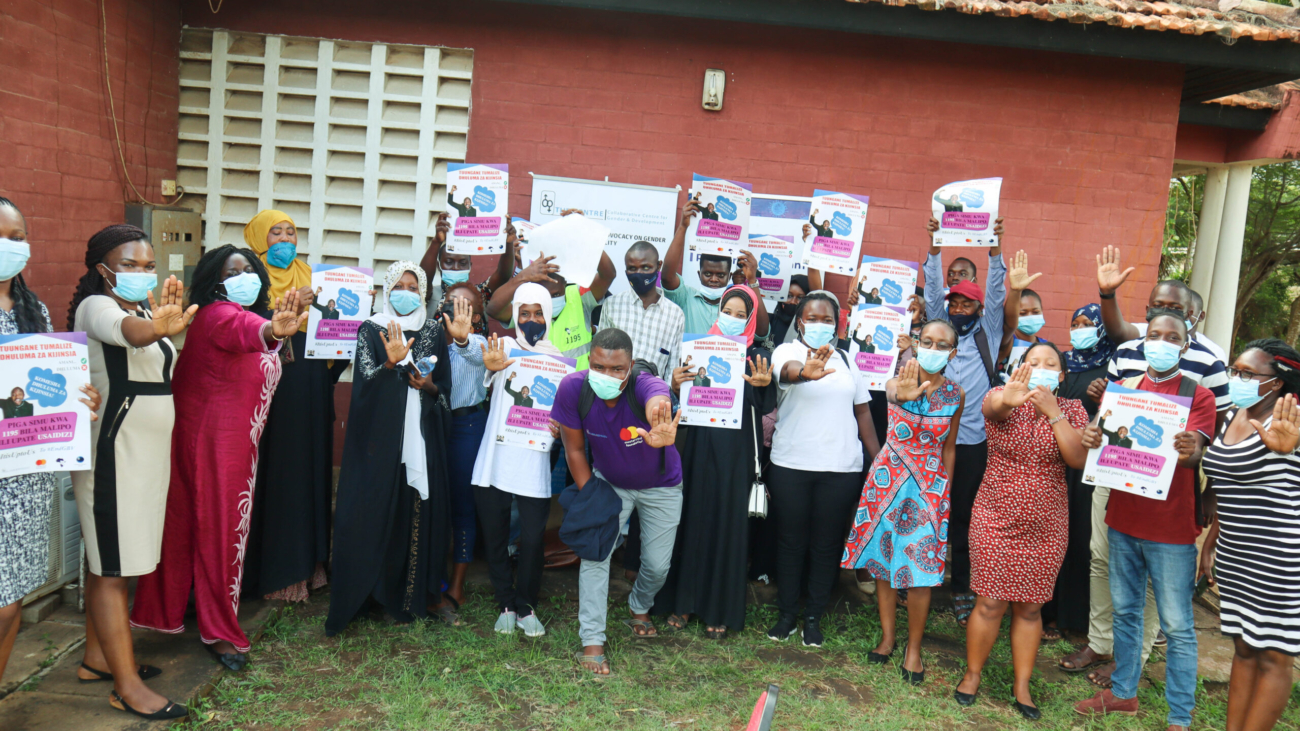
In response to the spike of SGBV witnessed during the breakout of the COVID-19 pandemic, Collaborative Centre for Gender and Development (CCGD) through COVID-19 Recovery and Resilience Program supported by Mastercard Foundation. The program sought to strengthen the support and services to SGBV survivors by offering institutional support to the County Referral Hospitals, the HAK 1195 toll-free helpline, County Administration – Police Satiations and Safe Shelters in Busia, Kajiado and Kwale counties.
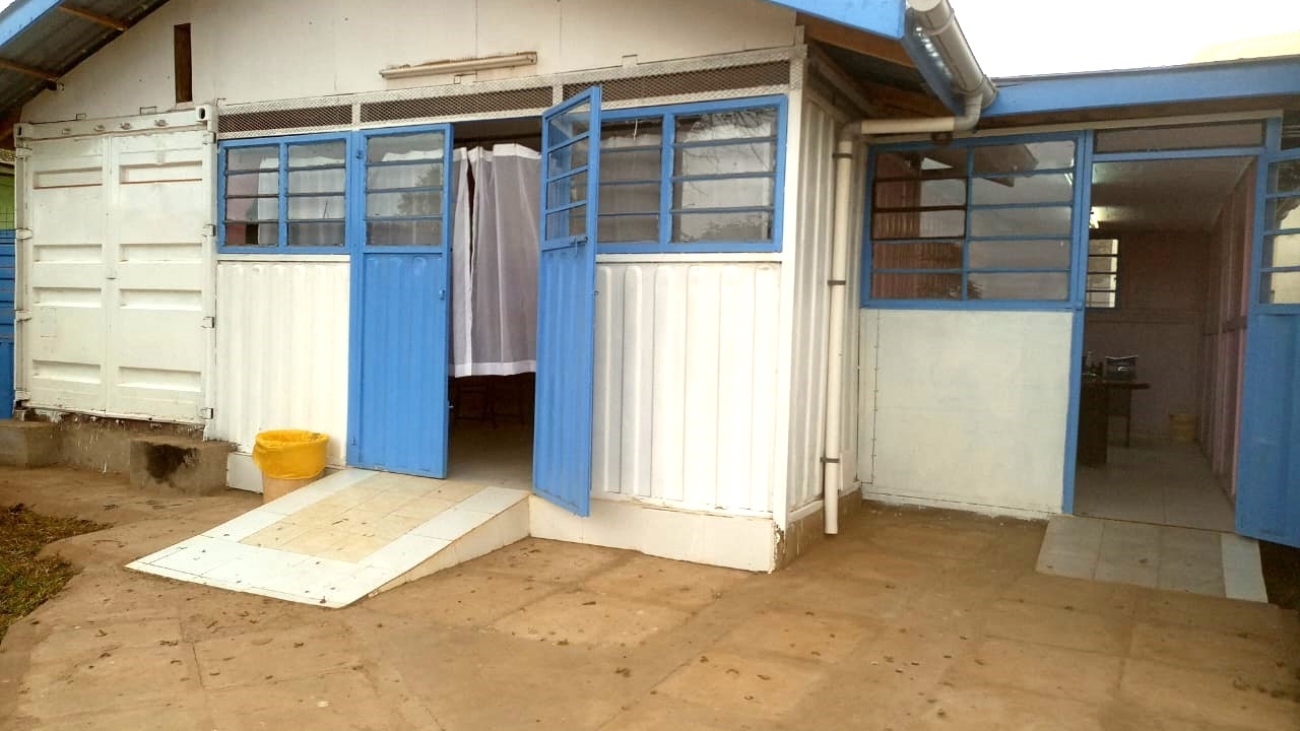
One of the major outcomes of the two-year program was the establishment of Gender-Based Violence Recovery Centres (GBVRCs) at Busia County Referral Hospital, Kajiado County Referral Hospital and Msambweni Level V Hospital.
The Centres were established to strengthen support and services by ensuring that all SGBV survivors have adequate and timely access to quality services in the three counties.
The GBVRCs offer safe spaces where the survivors can get SGBV support services including medical attention, and psychosocial support, connecting them with referral pathways whenever they report their cases. Further, some l survivors are provided with an in-kind grant which aids them in rebuilding their lives and following up with referral services.
The centres also act as SGBV data collection centers. According to CCGD Research and Data Analyst Program Assistant, Mr. Calvin Chepsiror a total of 321 SGBV cases were reported between January and December 2021 at the three GBVRCs.
He says 252 of the cases were reported in Busia County, 61 in Kwale County and 8 in Kajiado County. He attributed the variation to different factors such as the Centres not being established at the same time.
“The variation witnessed especially in Kajiado County was because the Centre started operating in November, meaning we only recorded reports for two months,” he said.
According to the data 87.54% were female and 12.46% were male this he attributed to the vulnerability of women and girls and the fact that women often report their cases while the men usually shun away from reporting such cases.
Defilement cases were the highest with a record of 182, assault 100, rape 15, sodomy 14, emotional 4, perpetrator 4, and Intimate Partner Violence (IPV) 2. This points out children are more vulnerable to SGBV since they cannot defend themselves against the perpetrators or they can be cured easily by the perpetrators. Further, it was also evident that during school closure the cases of SGBV spiked as witnessed in the month of April and September where 15 and 67 cases were recorded respectively during school holidays.
Civil Society Organizations (CSOs) and other interested groups in Busia County have agreed to develop action points that will see the county’s Sexual Gender-Based Violence Policy linked to Generation Equality Forum (GEF) Commitments as part of the Busia County GEF blueprint. The CSOs will review the SGBV policy to link it to the GEF commitments. They will also develop Busia County Blueprint commitments on the implementation of GEF.
CSO representatives were speaking during a two-day meeting held between 14th and 15th June 2022 that also focused on highlighting the critical challenges to preventing and responding to GBV and advocating for the realization of the ICPD+25 and SDGs. The CSOs also called for capacity building of the health care workers responding to SGBV especially those at the Gender-Based Violence Recovery Centre (GBVRC) in Busia County Referral Hospital. The GBVRC was established by the County Government with support from Collaborative Centre and Gender Development (CCGD) to provide clinical and psycho-social services to GBV survivors as well as boost the SGBV referral chain by supporting the collection and preservation of forensic evidence for the prosecution of cases.
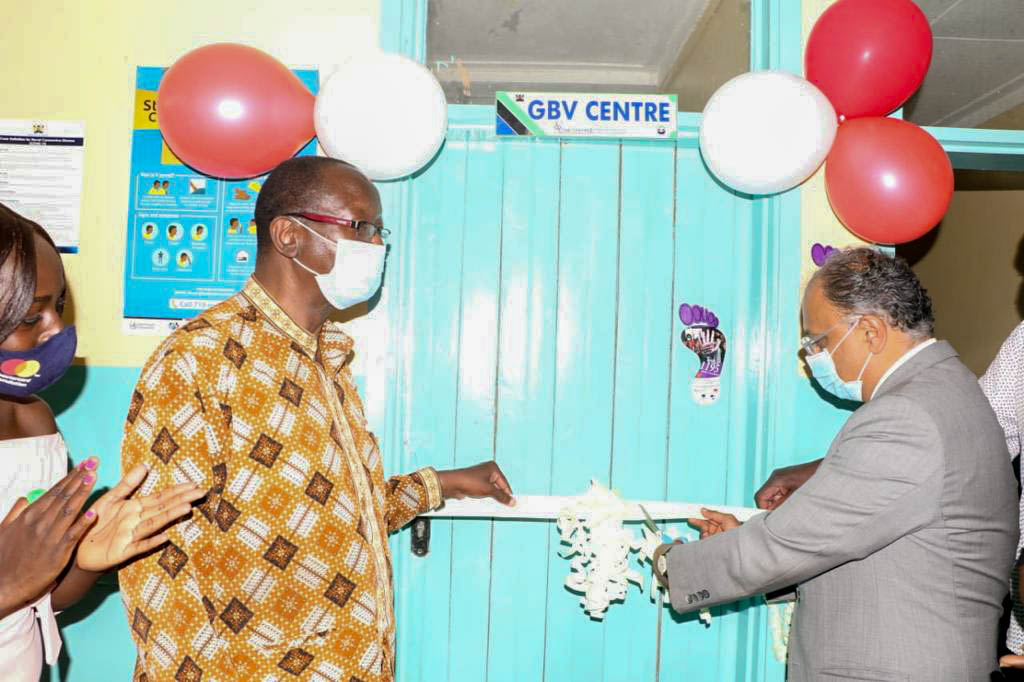
PS. State Department for East African Community, Dr. Kevit Desai (right) officially opens the Gender Based Violence Recovery Centre at Busia County Referral Hospital on 22nd January 2021 (File CCGD)
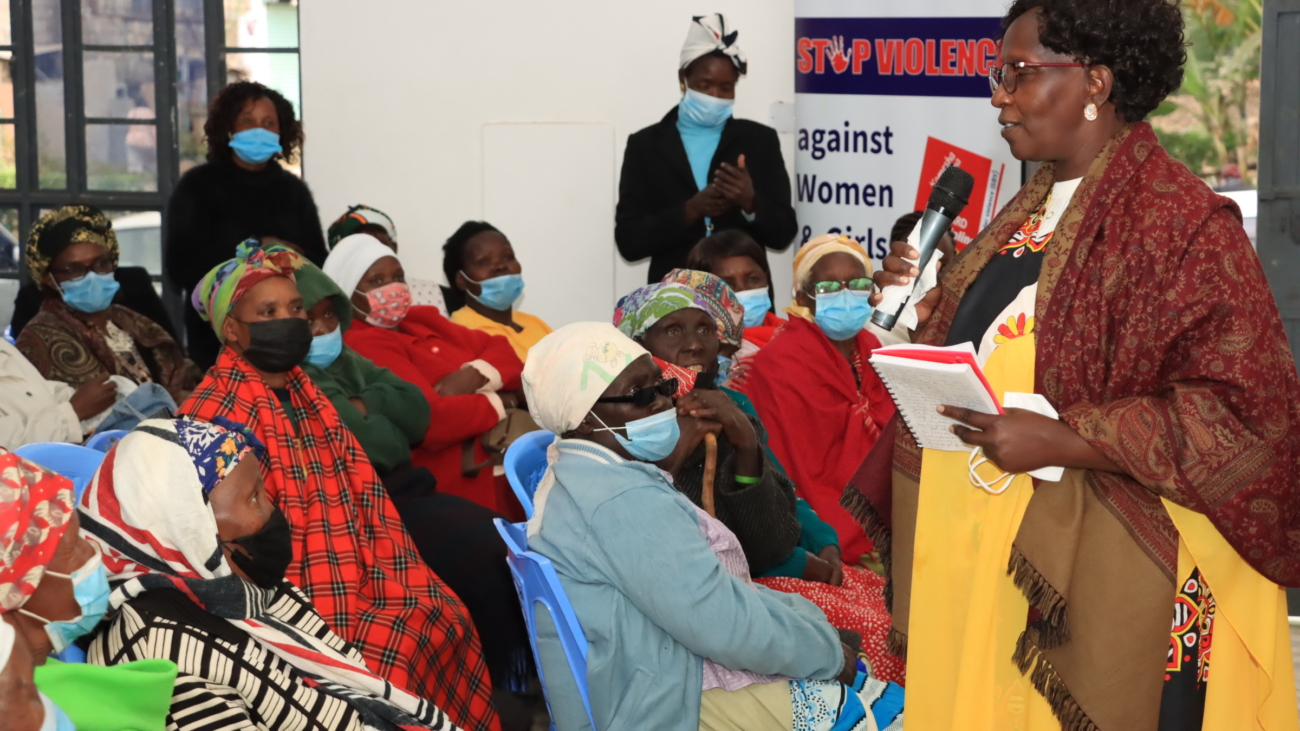
Chief Administrative Secretary for Gender, Hon. Jebii Kilimo addressing widows during an event organized by Come Together Widows and Orphans Organization (CTWOO). [Courtesy CWTOO]
Pokot, Turkana and Marakwet (POTUMA) women leaders as well as those from Baringo have vowed to meet the bandits and plead with them to down their weapons and end the bloodbath constantly witnessed in Kerio Valley.
Speaking at the forum in Eldoret, Chief Administrative Secretary (CAS) for Gender Hon. Jebii Kilimo said that the killings are unfortunate because the four warring communities intermarry and thus they are relatives.
She noted that during peace meetings, only the elders and leaders attend the meetings while the youth who are at the forefront of the banditry and wars bedeviling the four communities are absent. She called for the youth to be involved in such peace meetings since they are the right targets for the peace messages.
She observed that majority of women are widowed with children due to violent conflict resulting in the deaths of young men. She feared that the generation might be wiped out.
The women agreed to jointly strategize for common priorities to enhance women’s roles and networks in peacebuilding in their respective areas of residence. Some of the activities and events suggested included; inter-communal dialogue, prayers, community peace dividend programs, intercommunal market days, and response to early warning signs.
Also present was Tecla Namashanja from Coalition for peace in Africa (COPA), Australian High Commissioner, Mr. Williams Lukes, Elgeyo Marakwet Governor, Alex Tolgos, Turkana County CEC Gender, Youth, Tourism, Minerals, Climate change, Environment and Culture Special Deputy County Commissioner (coordination the Kerio valley corridor- West Pokot, Baringo and Marakwet Boundaries), Tiaty West Sub- County Administrator among others.
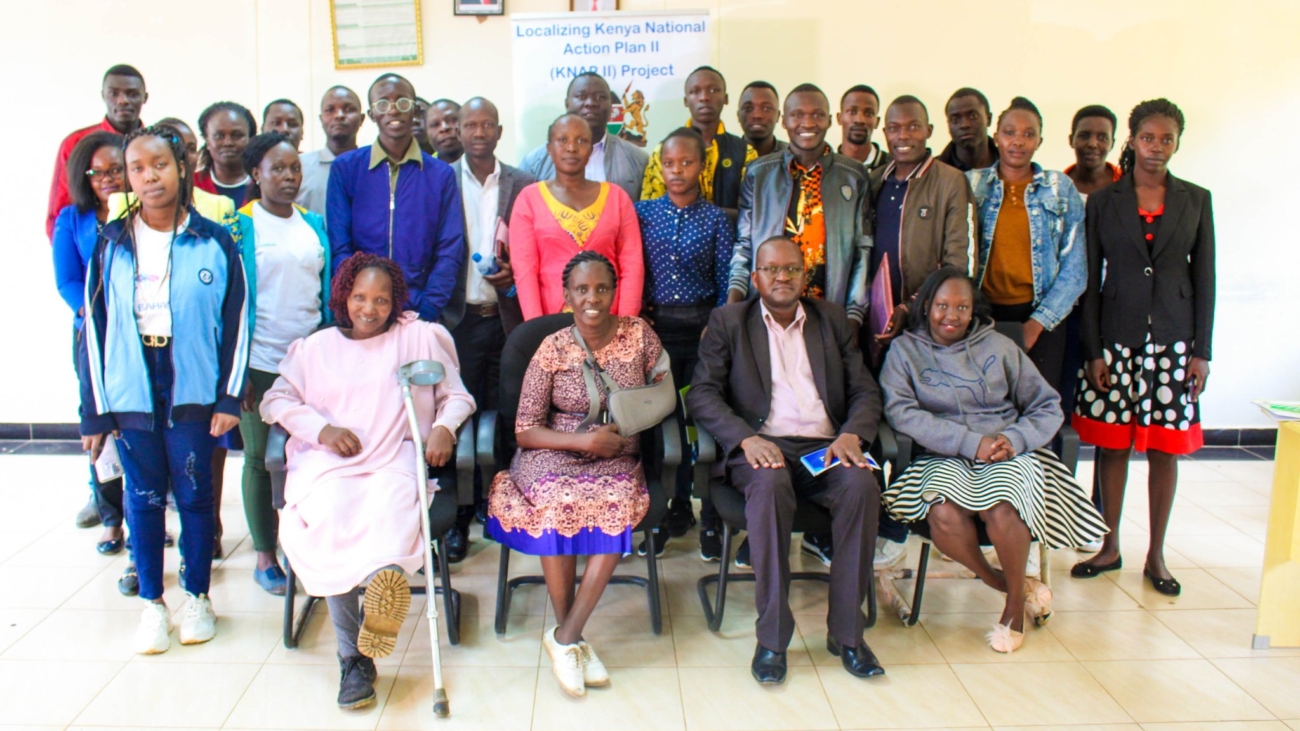
CCGD is contributing to supporting the counties of Baringo, Mandera and Samburu to implement localized county action plans on women peace and security as envisioned in the United Nations Security Council Resolution 1325 (UNSCR 1325) and Kenya National Action Plan (KNAP II)
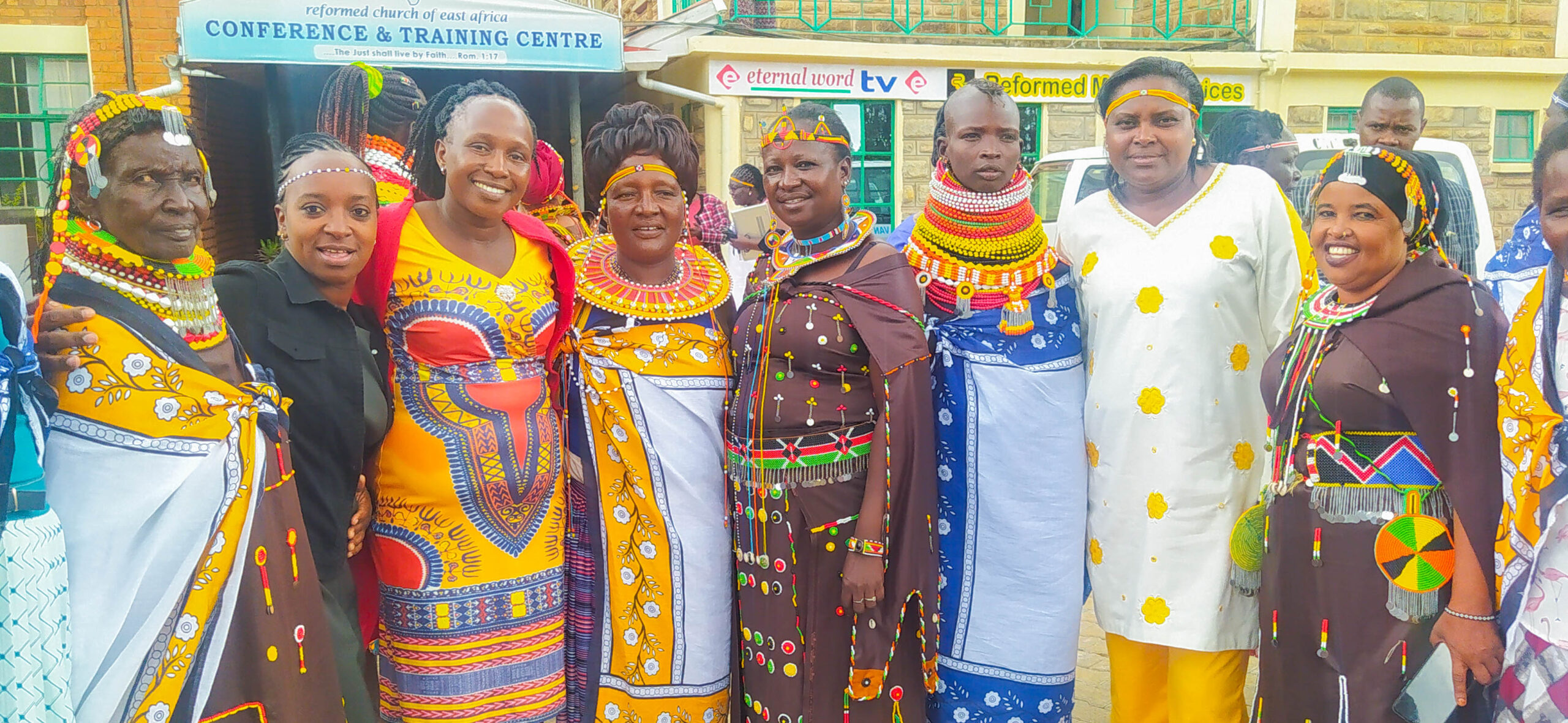
Baringo County Administrator, Carol Jebet (third-left) with a group of women who are members of POTUMA Women Group during POTUMA women leadership forum held in Eldoret town. [Courtesy]
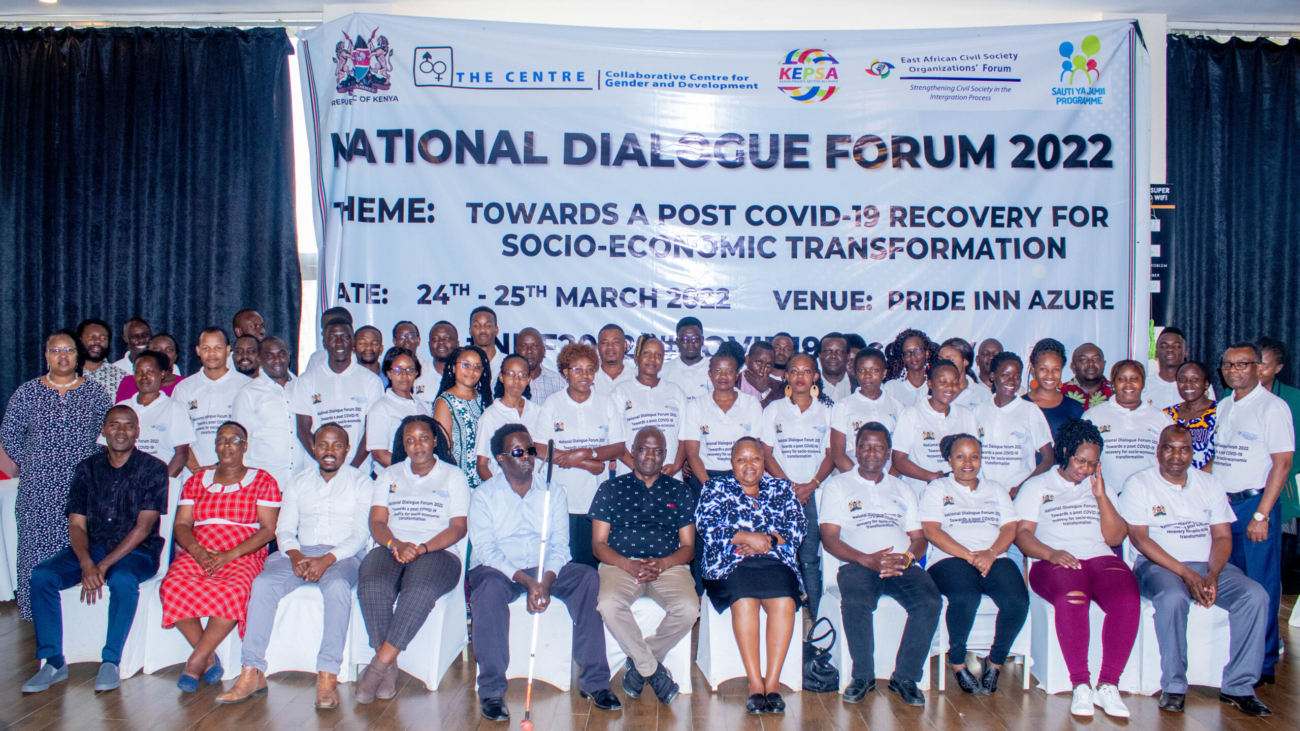
In gearing up for the 7th East Africa Community Secretary General’s Forum under the theme, “Towards a post-COVID-19 recovery for Socio-economic transformation”. Kenya through the Ministry of East African Community and Regional Development convened Kenya’s National Dialogue Forum (NDF) between 24th and 25th March 2022.
While addressing the stakeholders, the PS. State Department for East African Community, Dr. Kevit Desai noted that the NDF provides a platform where issues affecting the EAC citizen are discussed and fast-tracked to the annual Secretary General’s Forums. Adding that through Consultative Dialogue Framework (CDF) a lot has been accomplished such as the inclusion of other professionals in accounting, architecture, veterinary, surgeons, land surveyors and advocates who have all been included in the EAC integration agenda.
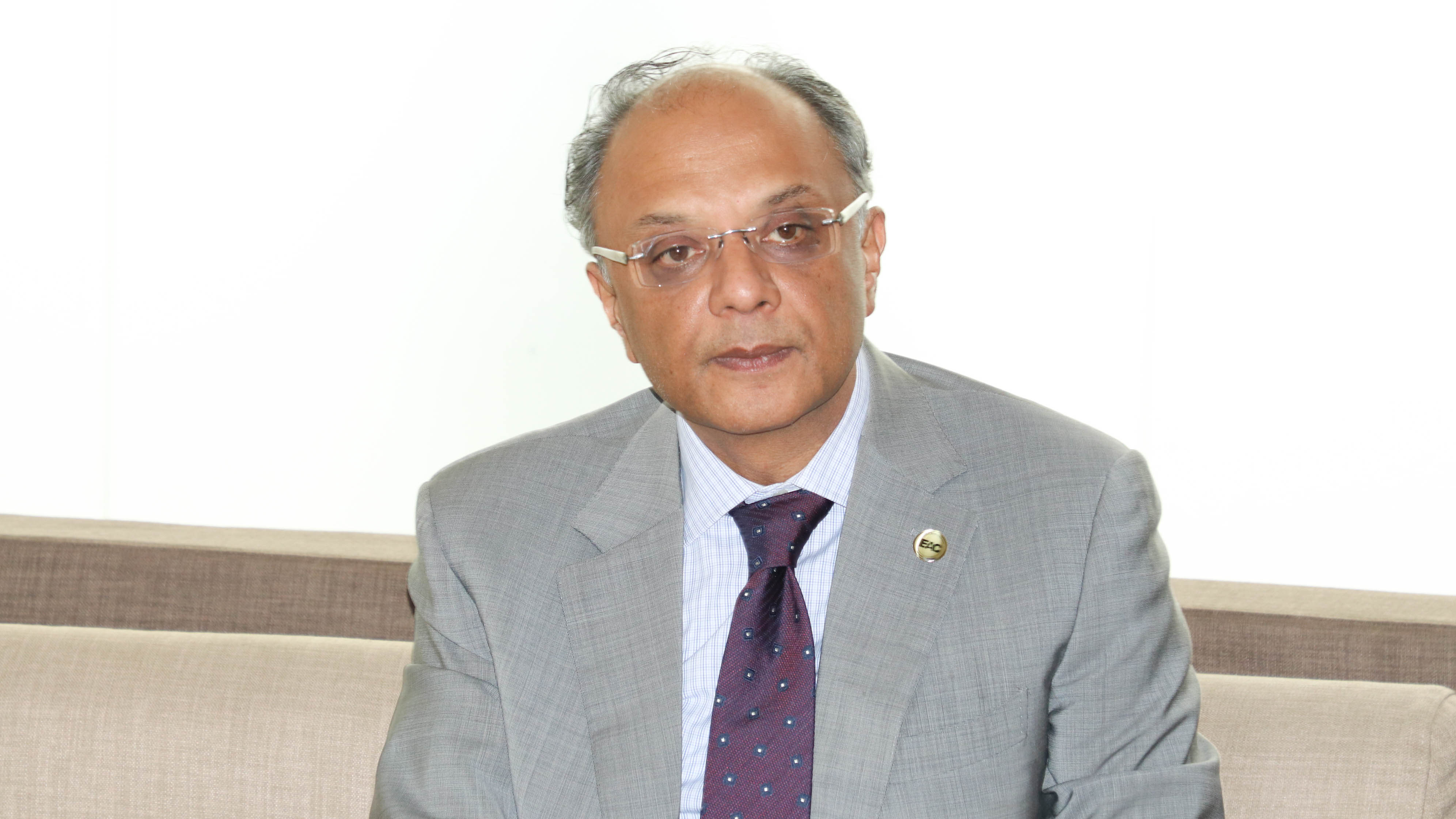
PS. State Department for East African Community, Dr. Kevit Desai during the National Dialogue Forum held on 23rd and 24th February, 2022 in Nairobi. [Getrude Angela, CCGD]
The PS also said through the EAC integration process they have witnessed harmonization of the education curriculum including the development of rules and regulations guiding the conduct of examination, and certification in the EAC education institutions.
Dr. Desai lauded the efforts of private sector organizations in advocating and helping achieve a business and economic environment through evidence-based policy advocacy leading to the harmonization of trade presentation and regulatory frameworks. Further, they have also helped in the harmonization of standard products and realization of free movement of factors of production including addressing the trade barriers to cross-border women traders and micro and small enterprises.
He said that NDF offers the stakeholders an opportunity to celebrate some of the successful outcomes of the EAC integration process. He urged them to reflect on the commitments under CDF and develop a scorecard that would remind the policy makers where is as far as the EAC integration agenda is concerned.
In his remarks, the Chair of the National Dialogue Committee (NDC), Mr. Masheti Masinjila noted that the CDF sets up the protocol for continuous and systematic dialogues between the CSOs, PSOs and other interested groups – the youth, PWDs, political parties and professional associations.
According to Masheti, after the break of the old EAC, it was decided that the new EAC will be a people-centered and driven community. Meaning if the seven heads of EAC partner states disagree, their disagreements cannot lead to the fall of the community.
The Chair pointed out that the discussions emanating from the forum are intended to lay the ground for different kinds of policies for the government.
“Government works through policies and laws – they need policies to inform their action plans and at these kinds of meetings lays the ground for different kinds of policies,” said Masheti.
He added that they will lobby at the regional level to carry over the outcomes of the meetings to the 7th SG’s Forum which will be held in Nairobi, Kenya.
He also acknowledged the support the dialogue process has been receiving from ‘Kenyan best donors’ particularly Trade Mark East Africa, Ford Foundation, and FAWE- Kenya whom he said have always supported the dialogue processes.
“We appreciate the support we have always received from the ‘Kenyan best donors’ who understand and appreciate the dialogue process and availing funds for these functions,” said the NDC Chair.
Also present was Ms. Linda Ochiel, Ford Foundation Program Officer in the Eastern Africa region who said that the Foundation supports regional mechanisms such as the EAC. She added that in the Eastern Africa region they focus on two key issues – corruption and protection of civic space.
Ford Foundation Program Officer in the Eastern Africa region, Linda Ochiel addressing participants of the National Dialogue Forum held 3rd and 24th February, 2022 in Nairobi. [Getrude Angela, CCGD]
“We support regional mechanism because the government is at the core of the things the foundation is very keen on,” she said.
Adding: “To have a regional mechanism essentially means that the civil societies and the public would have an alternative mechanism which they can use to hold the government accountable on governance, democracy, and human rights issues.”
She said the Foundation is keen to ensure that there are resources available at the regional level to support initiatives to ensure that the regional mechanisms have sufficient resources to be able to fulfill their mandates.
Others present included representatives from Ministries and State Departments/Agencies; East African Civil Society Organizations’ Forum (EACSOF); Disability Sausage; University of Nairobi Women Economic Empowerment Hub (UON WEE Hub); Africa Youth Trust, Horn of Africa Youth Network, Collaborative Centre for Gender and Development (CCGD), Transparency International Kenya (TIK), CUTs, International Institute of Legislative Affairs (IILA), East Africa Tax Governance Network (EATGN) Eastern Africa Child Rights Network (EACRN) among others.
The stakeholders deliberated on various national issues papers including Re- focusing on anti-corruption efforts to reduce gender-based and other inequalities; Domestic resource mobilization in EAC – Illicit financial flows in the extractives sector in the EAC; Removing barriers to free movement of goods, services, and persons through digital trade; Proposing adoption of regional policy intervention for regulating trans fats per World Health Organisation global agenda; Double Taxation Agreements (DTA) Leveraging on youth demographics – Youth Peace and Security; The socio-economic effects of COVID – 19 on PWDs; COVID-19 and human trafficking: The socio-economic etiology of human trafficking; Accelerating COVID-19 recovery and resilience through Gender Responsive Budgeting in East Africa; COVID-19 and Sexual Reproductive Health Rights (SRHR) of girls and young women; Why we should avoid checking boxing in peace and conflict: Experience of Persons with Disabilities.
Some of the key resolutions included:
Develop a policy framework to guide regional trade to address the lack of harmonized rules of digitization.
Implementation of Common Market Protocol through a harmonized taxation policy.
Digitization of tax systems across the region for ease of reference on the trial record.
Create an enabling environment for the realization of socio-economic rights as enshrined in Constitution and EAC Treaty.
Review of the law to ensure petty offenses are not custodial within partner states.
Increase Budget allocation IEBC to enable them to hold PWDs responsive elections.
Protection of vulnerable groups such as PwDs, youth, women, and children
What comes to your mind whenever you hear the term ‘police’? To some the term brings fear or even anxiety, to others they will think of safety while others will think of law and order. But for Agatha Wanzala, an anti-GBV youth activist in Busia County the term reminds her of an ordeal that almost ruined her life. Ms. Wanzala who hails from Bunyala is a survivor of attempted rape by a police officer in Uganda. “I was almost raped in Uganda by a Police Officer but to me, that was a drive to work and talk about GBV,” she said. She says the act did not drain her emotionally or physically but made her start championing for women’s and girls’ rights in relation to sexual gender-based violence. Personally, this was a turnaround in my life, I can now share my story with anyone and give survivors hope that whatever happened to them is not a loss. “Bent but not broken, it happened, I accepted, I talk about it and it didn’t kill me but rather it made me a much better person than I was,” remarked Ms. Agatha After sessions of counseling, the anti-GBV activist says she embraced forgiveness: “I never used to enter a police station because I was scared of the police but after a series of counseling sessions, right now I can talk to the police on GBV issues or even have a random conversation with them, something I never used to do,” she said. Despite being so passionate about GBV issues, Ms. Wanzala says she faces numerous challenges such as being undermined by the older survivors who she says, “At times survivors who are much older than me tend to undermine me and look at me like I don’t know what am saying.” However, the survivors have begun to accept her to the extent of referring other survivors to her. She appealed to fellow survivors to share their stories – “Never hesitate to speak out, always speak out and your story will help someone somewhere.”
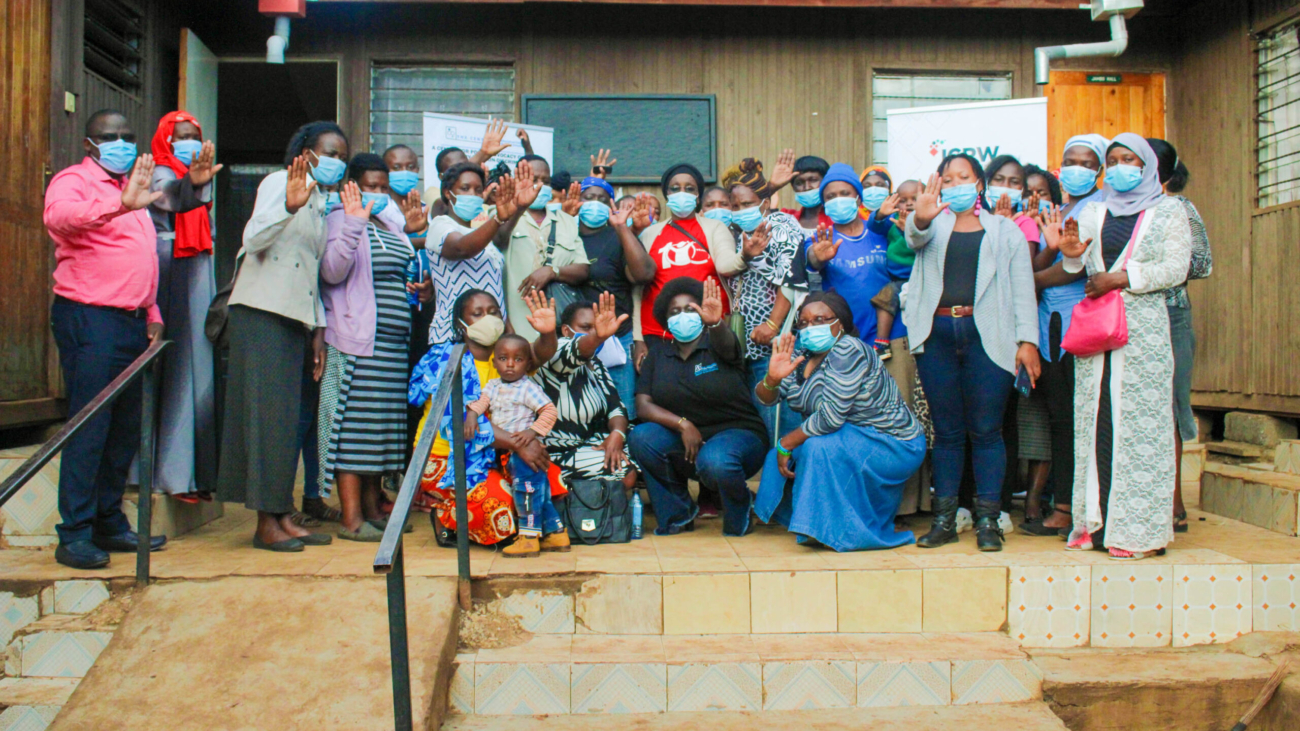
In culminating the 16 Days of Activism against Gender Based Violence (GBV), Collaborative Centre for Gender and Development (CCGD) East Africa Civil Society Organizations’ Forum (EACSOF) in partnership with International Center for Research on Women (ICRW) hosted a session with women in informal employment in Kibra on Wednesday, 08 November 2021.
The session was to find out the factors affecting young women economic empowerment and GBV including the effects of COVID-19, the response and referral pathways of GBV if any and identify areas of need/information/skill gaps which we can fill through capacity building, awareness creation.
The women were also sensitized on the different referral pathways especially in the Kibra context from different perspectives being as a child, young girl/boy as well as women. The women were encouraged to work with their area chiefs, Community Health Volunteers (CHVs), Nyumba Kumi officials, local Community Based Organizations (CBOs), police and health care centres. Cryspin Afifu of ICRW called for consideration of women in informal trade when it comes to policy formulation.
“In Kenya 83% of women are in the informal sector and these women need to be considered when it comes to policy formulations,” he said. Adding that women should earn their income and livelihoods decently despite their choice of career/job.
The women traders of Kibra get their income from informal businesses such as hawking, hair dressing, mutumba (second hand clothes) business , groceries and bodaboda riding among others.
The women were also accorded an opportunity to share their experience and the challenges they experience in their business. They pointed out that COVID-19 had a negative effect to their businesses, leading to reduction in clientele base which resulted to them shutting down their businesses.
In regards to SGBV, the women requested for more sensitization around evidence preservation and witness protection, matrimonial and property Acts, men participation towards ending GBV among other topics. “We would appreciate if Civil Society Organizations worked towards increasing shelters in Kibra, said Christine who is a business woman in Kibra selling products online.
According to Christine the increase of shelter will come in handy to ensure the survivors of SGBV are safe and close to where they are getting justice from.
The women were also sensitized about Jasiri Fund which is a survivor centred fund that facilitates GBV women survivors to rebuild their businesses after the traumatic experience.
“Imagine going to sleep at night only to wake up to find out that you can no longer see anything,” remarked Evelyne Ogolla.
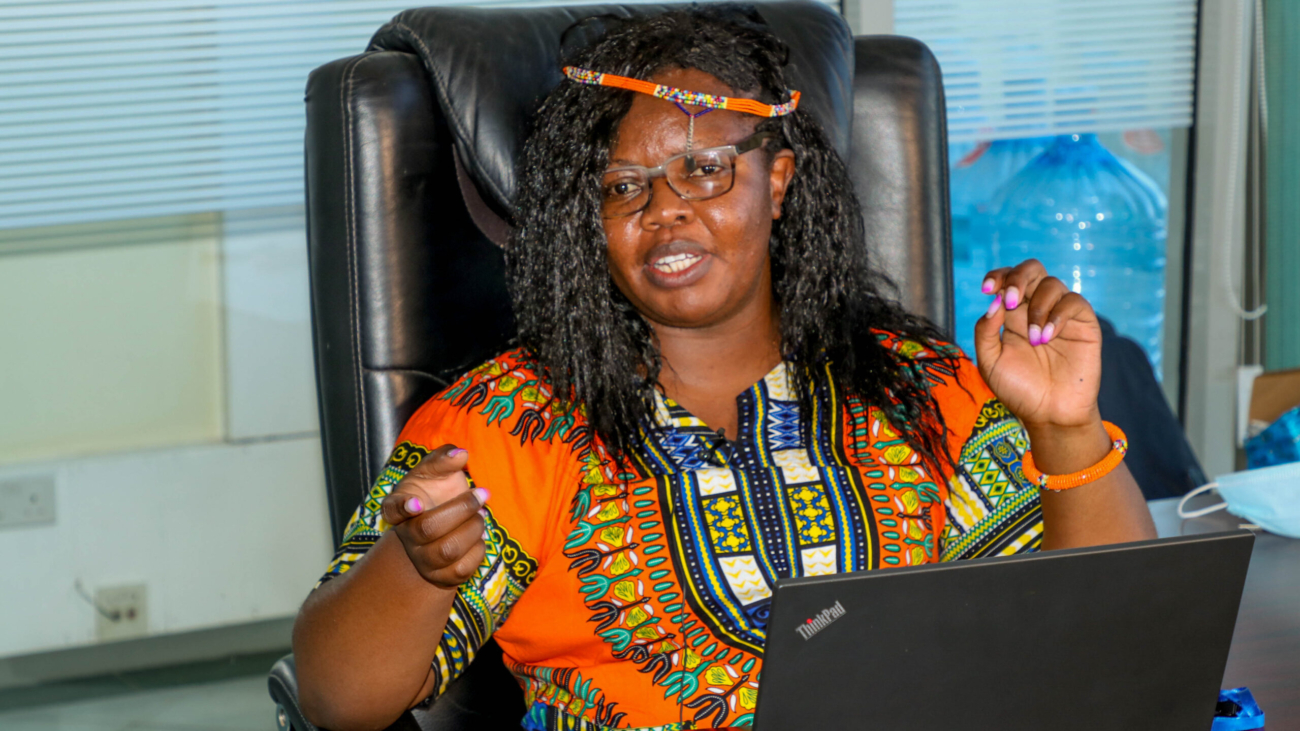
Evelyne Ogolla, a Regional Social Integration Officer at the Ministry of East African Community and Regional Development, has been visually impaired for the past six years. The firstborn in the family of four siblings says her condition started with severe migraines, persistent headaches, very high blood pressure, mild sinuses, pain in the eyes and blurry vision. She was forced to undergo magnetic renounce imaging (MRI) with no her condition.
The MRI revealed that she had excess spinal cord fluid that affected her optical nerves. The doctors then advised her to undergo a procedure called tapping which helps reduce the spinal cord fluid. This did not work so well, leading to a surgery called shunting, but her condition did not change in the end.
“October 27, 2015, was the darkest day of my life, both physically and emotionally, I woke up that morning and everything was dark,” she said.
The graduand of Development Studies from Accra University narrates that her life then took a turn around at this point and she has to adjust accordingly to adapt to her new normal. She decided to quit her job at that time because she could not perform her duties anymore and had to stay home for a year.
She went through a myriad of rejections and stigmatizations from friends and family which affected her psychologically. However, in 2017, she made a move that drastically changed her life as she decided to join the Kenya Society for the Blind.
“In 2017, I decided to join Kenya Society for the Blind where I learnt how to use the brail, the assistive technology and mobility such as the white cane and there is where I met people like me and in fact people who were even worse than me. My life just changed completely and joined the Persons with Disabilities club,” she said.
After applying for so many jobs in 2019, Evelyne managed to secure two internships with the State Department for Transport and Public Works and In September 2021, she beat all odds to secure a job as the Regional Social Integration Officer.
“You can imagine the post only wanted two people and I was among the two who successfully landed the job,” she said.
Adding that the government is really trying on the 5% allocation for Persons With Disabilities (PWDs) and it through that allocation she is able to work as an intern at the state Department of Transport and Public Works.
Despite securing the job at the Ministry, she faced the challenge of not having assistive devices to facilitate accessing and inputting official documents which totally incapacitated her. But through the help of the Collaborative Centre for Gender and Development (CCGD), the Regional Integration Officer was able to acquire the assistive devices which included a laptop fitted jaws- a screen reader office duties the Digital Accessible Player Information System (DAISY) a talking book for the visually impaired persons.
She says through her work at the ministry, she purposes to change the lives of young women to be economically empowered as she believes that women are the backbone of the society and nation at large.
She urged the government to continue including PWDs in everything that concerns the nation as they have in the recent past. However, she called on women who are visually impaired to stand and speak out and knock on doors in search of help.
“Do not give up, keep pushing because nothing comes on a silver platter and do not forget to get relevant skills and perfect them,’’ she reiterated
Women’s participation in economic development is impeded by their early childcare roles. However, child care facilities present an opportunity for redistribution of unpaid care work that is largely performed disproportionately by women. Generally, childcare provision in most urban informal settlements and rural settings are highly informal, little policy attention has been directed to unpaid care and domestic work and particularly childcare. Early childcare is an intense 24-hour activity that consumes the time of women thus reduces their mobility as well as time and freedom to engage in income generating and social activities.
Collaborative Centre for Gender and Development (CCGD) is partnering with the University of Nairobi WEE-Hub, Ministry of East Africa Community and Regional Development, Uthabiti Africa and East Africa Civil Society Organizations’ Forum to initiate a child care program along the border counties – Kwale, Busia and Kajiado counties.
The programs’ main objective is to; enable mothers/parents to access quality affordable childcare and free mothers to engage in income generation activities including trade, entrepreneurship and employment. The project is also intended to assist redistribute the burden of childcare from mostly mothers.
“Since its inception on 2nd August 2021, the Busia Childcare Centre has admitted a total 37 children; 20 boys and 17 girls,“ said Agneta Okumu, the Busia Childcare Administrator. “The youngest is three-months old and eldest is three years and seven months old, “she added.
The Centre has trained caregivers with capacity to handle children safely within the recommended COVID-19 guidelines and. they have been vaccinated against COVID-19.
Speaking during their engagement with CCGD, majority of women cross-border traders said that the creation of the facility is a relief to them and their businesses and that their profit margin has increased tremendously since the inception of the facility in August.
According to Veronica Makoha, a member of Busia Women Cross-Border Association, the creation of the facility has provided her with sufficient time for her business.
“For now, I have all the time, all my concentration and focus will be on my business,” said Veronica.
The facility also offers space where the young mothers whose education has been affected by the burden of early childcare responsibilities. The daughter of Almerida Ayoko is one of the beneficiaries of the facility.
Almerida says that the Centre has not only helped her but has also helped her daughter who was able to get back to school.
“This Centre has been of great relief to me, since bringing Mary here I am able to do my business without any hindrance, her mother too has also gone back to school to continue with her studies,” said Almerida.
She urges the young mothers in Busia County to seize the opportunity and bring their children to the facility so that they can get back to school.
“I call upon the young mothers who have left their children with their parents at home to bring the children to Centre so that they can be relieved from the burden of childcare.”
Further, her business has grown since she has reduced spending while on the business as compared to when she used to carry her child to the business.
“Initially, I used to save Ksh. 300 per day in the merry go round (chama) but at moment am doing Ksh. 500 per day,” she said.
They say men cannot multi-task while women can attend to various activities at the same time but when it comes to running of a business and taking care of a child concurrently the saying is tested to the limit as each of the activities requires undivided attention.
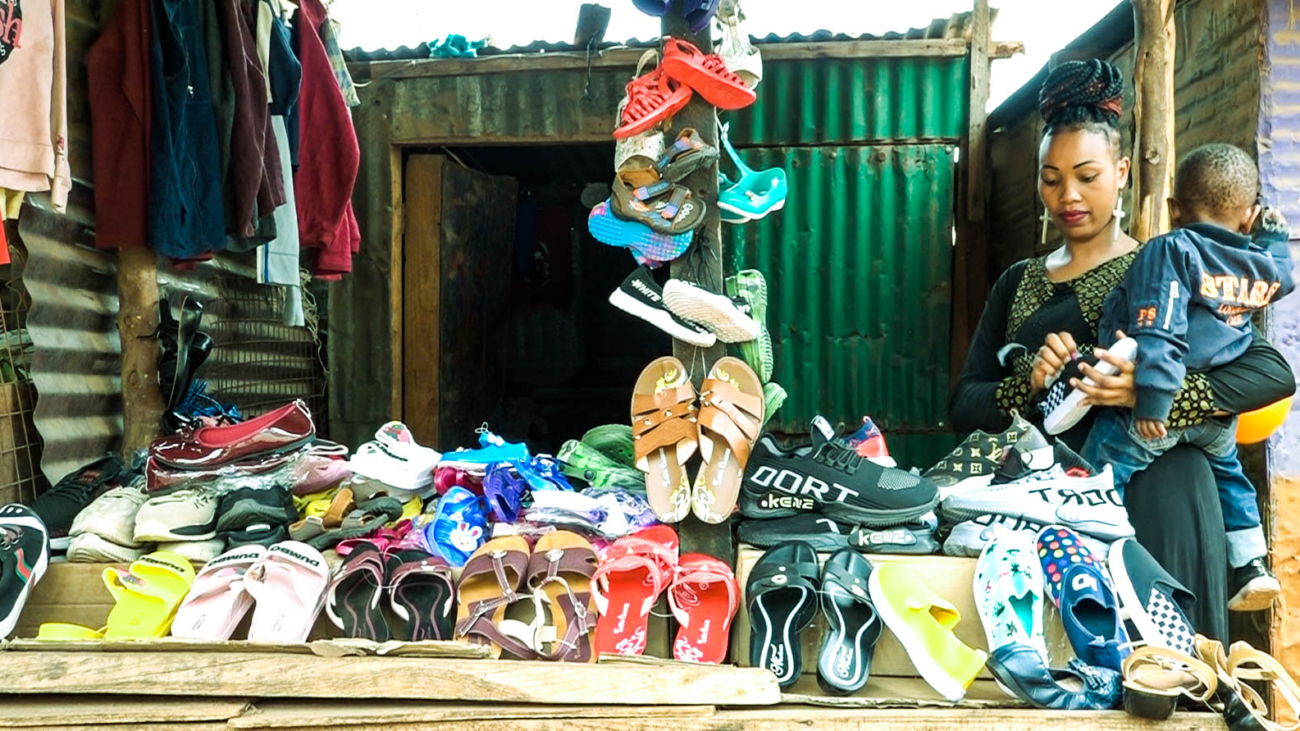
Rose Nyakio a trader who sells shoes along Amboseli Road in Namanga border is one of the many women who are grappling with the burden of childcare while at the same time running their business. Her situation is exacerbated by the fact that her business is located along the road.
This Rose says her business is facing by numerous challenges one of them being the burden of childcare, adding that her son occasionally goes about roaming forcing her to leave the business and look for him while leaving behind customers who in many cases do not wait for to come back and attended to them. She goes on to say that some customers are often irritated when the son cries as a result they leave and sometimes she has to breast feed the son in public which she says doesn’t auger well with some customers especially the male ones.
During the interview, she called on Collaborative Centre for Gender and Devlopment (CCGD) to come to her aid and that of many women who shares a similar predicament. She adds that with the childcare facility in place, she will be able to have more time for the business and child care duties will no longer be a hindrance to her business.
CCGD aims to contribute to redistributing the burden of unpaid (child) care work borne by women cross border traders through its partnerships with Ministry of East African Community and Regional Development, University of Nairobi Women Economic Empowerment Hub (UON WEE-HUB), East Africa Civil Society Organization Forum and Uthabiti Africa.